Sanctified Common Sense Decision Making

Everyday Hearing God

When I came to Troas to preach the gospel of Christ, even though a door was opened for me in the Lord, my spirit was not at rest because I did not find my brother Titus there. So I took leave of them and went on to Macedonia. But thanks be to God, who in Christ always leads us in triumphal procession, and through us spreads the fragrance of the knowledge of him everywhere.

2 Cor 2:12-14

Hearing God is often relegated to only supernatural experiences: audible voices, angelic visitations, and divine encounters. However, hearing God could often be described in scripture as sanctified common sense. Over time, our thinking processes are transformed by scripture, our understanding grows in our knowledge of God’s ways, and our wills are conformed to God’s direction (Rom. 12:1-2). We begin to make wise and godly decisions without dramatic spiritual experiences. As we grow in Christ, our understanding of God’s will becomes an every day ordinary occurrence. As believers, we should form a level of sanctified common sense when making everyday life decisions.

Proverbs, and the wisdom literature in general, counter the idea that being spiritual means handing all decisions over to the leading of the Lord. The opposite is true. Proverbs reveals that God does not make all people’s decisions for them, but rather expects them to use his gift of reason to interpret the circumstances and events of life within the framework of revelation that he has given. Yet when they have exercised their responsibility in decision-making, they can look back and see that the sovereign God has guided.

Graeme Goldsworthy,  New Dictionary of Biblical Theology, eds., Brian S. Rosner, T. Desmond Alexander, Graeme Goldsworthy, D. A. Carson (Downers Grove, IL: InterVarsity, 2000), 210.


When It’s Good to Mourn

When We Grieve Our Sin, God Promises to Heal

God blesses those who mourn, for they will be comforted.

Matt. 5:4 NLT

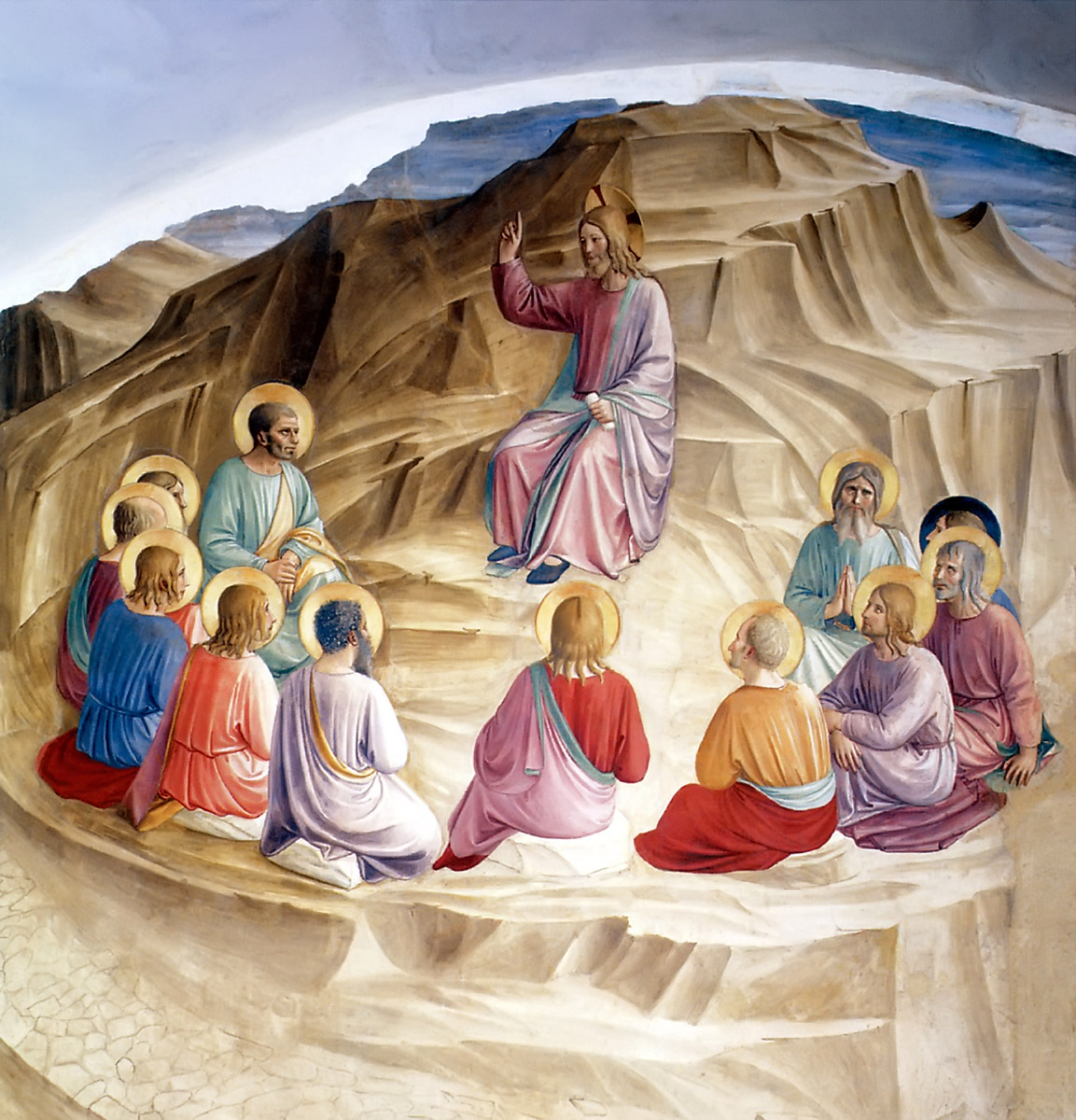
We discussed the Sermon on the Mount (Matt. 5-7) here and here. We found that the Sermon on the Mount is what our lives will look like when Jesus is having his way in us. With much encouragement, we discovered that Jesus will make us what he teaches what we should be. Then, we saw that spiritual bankruptcy is a good thing. It’s a good thing for God does not call us to be adequate, he only calls us to be available. Jesus yearns for us to come to the end of ourselves. He is waiting for us to stop trying to prove ourselves and to start trusting his sufficiency.

Surprisingly, mourning also becomes a good thing. Jesus speaks of a mourning that grieves over our sin, the corruption of our motives, the loss of innocence, and the pain we caused God and others. Gospel mourning opens the door for God’s healing, forgiveness and restoration. It is good to mourn our sin for there God’s redemption is found.

What is the right gospel-mourning?

It is spontaneous and free. It must come as water out of a spring, not as fire out of a flint. Tears for sin must be like the myrrh which drops from the tree freely without cutting or forcing. Mary Magdalene’s repentance was voluntary. ‘She stood weeping’ (Luke 7). She came to Christ with ointment in her hand, with love in her heart, with tears in her eyes. God is for a freewill offering. He does not love to be put to distrain.

Thomas Watson, The Beatitudes: An Exposition of Matthew 5:1-12


Coming to Christ

One Thing and One Thing Only

Come to me, all of you who are weary and carry heavy burdens.

Matt. 11:28 NLT

In the early eighties, I worked with the Agape Force in Tacoma, Washington. We all reached out to one older man and his family for several months. It was obvious that the Holy Spirit was convicting him and drawing him to Christ. However, he refused to yield his whole heart and soul to Christ’s Lordship.

Who would direct his life? Jesus or him. This tug-of-war was THE major issue. It was odd, he wanted to do spiritual things and think he was spiritually-minded, but he refused to give his whole heart to Christ. As an alternative, he joined the Mormons, then the Witnesses, then a motorcycle group, and then . . . . You get the picture, he did everything, but come to Christ. Salvation is simple, but not necessarily easy: yield your whole life to Christ and trust his finished work on the Cross. You see, God asks just one thing and one thing only–come to Christ.

When a person turns to Christ empty—that they may be filled; sick—that they may be healed; hungry—that they may be satisfied; thirsty—that they may be refreshed; needy—that they may be enriched; dying—that they may have life; lost—that they may be saved; guilty—that they may be pardoned; sin-defiled—that they may be cleansed; confessing that Christ alone can supply their need—then they come to Christ. This, and nothing more than this, is coming to Christ.

J.C. Ryle, Tract: Come!

HT: J C Ryle Quotes


Who Are the Poor in Spirit?

The Spiritually Bankrupt

Blessed are the poor in spirit, for theirs is the kingdom of heaven.

Matt. 5:3 NIV

Every year, the gospel reading for Ash Wednesday is the Jesus’ Sermon on the Mount (Matt. 5-7); it is a privilege to yearly meditate and preach on this great sermon. Last Ash Wednesday, we examined several significant truths found within Jesus’ magisterial teaching, let’s look at one of those insights in this post and several more in the coming days.

Who are the poor in spirit? Eugene Peterson paraphrases this verse in The Message, “You’re blessed when you’re at the end of your rope. With less of you there is more of God and his rule.” For Peterson, the poor in spirit are those who are at the end of their rope: they have nowhere else to turn, nowhere else to hide, and no one else who can help. They have nothing left, but God.

Indeed, the poor in spirit acknowledge their complete and utter bankruptcy before God. They are afflicted and know deep down inside that they cannot save themselves. The poor in spirit confess their unworthiness and utter dependence on God’s mercy and grace. The “poor” have confidence only in God. These dear ones will receive God’s kingdom: the rule and reign of Christ in their hearts now. They will experience the very life of God: all he is and who is in their lives today.

“Blessed are the poor in spirit”—towards God. Am I a pauper towards God? Do I know I cannot prevail in prayer; I cannot blot out the sins of the past; I cannot alter my disposition; I cannot lift myself nearer to God? Then I am in the very place where I am to receive the Holy Spirit. No man can receive the Holy Spirit who is not convinced he is a pauper spiritually.

Oswald Chambers, Studies in the Sermon on the Mount, electronic ed. (Hants, UK : Marshall, Morgan & Scott, 1996).


“He Came to Make Us What He Teaches We Should Be”

The Sermon on the Mount

Blessed are the poor in spirit, for theirs is the kingdom of heaven.

Matt. 5:3 NIV

It’s just impossible! Absolutely impossible! I thought to myself as I read the Sermon on the Mount for the first time. I can’t, and no one can, live and obey Jesus’ directives in this sermon. Three chapters of loving those who hate you, laying down your life for those who persecute you, and forgiving those who have used you. Not only are Jesus’ words difficult to keep, but also, these admonitions should be obeyed out of love with a joyful heart. This sermon is impossible to live. But, that’s the rub.

We can’t live the Sermon the Mount in our own power. We must be poor in spirit desperately needing God’s strength in our weakness (Matt. 5:3). We must be mourners, a people who grieve the state of our fallenness yearning for help (Matt. 5:4). We must hunger and thirst for righteousness for we have no means within ourselves to overcome the world’s influences, sin’s grip, and the devil’s temptations (Matt. 5:6). The Sermon on the Mount is lived not by being adequate, but by being available. That is, available to Christ’s all-powerful and sufficient grace (2 Cor. 9:8; 12:9).

The Sermon on the Mount can only be lived by trusting Christ to live his life in and through us (1 John 4:9). Only Christ successfully lived the Sermon on the Mount and he can do it again in us (Col. 1:27). By summary, the Sermon on the Mount is what our lives look like when Christ is having his way in us.

Beware of placing our Lord as Teacher first instead of Saviour. That tendency is prevalent today, and it is a dangerous tendency. We must know Him first as Saviour before His teaching can have any meaning for us, or before it can have any meaning other than that of an ideal which leads to despair. Fancy coming to men and women with defective lives and defiled hearts and wrong mainsprings, and telling them to be pure in heart! What is the use of giving us an ideal we cannot possibly attain? We are happier without it.

If Jesus is a Teacher only, then all He can do is to tantalise us by erecting a standard we cannot come anywhere near. But if by being born again from above  we know Him first as Saviour, we know that He did not come to teach us only: He came to make us what He teaches we should be. The Sermon on the Mount is a statement of the life we will live when the Holy Spirit is having His way with us (emphasis mine).

Oswald Chambers, Studies in the Sermon on the Mount, electronic ed. (Hants, UK : Marshall, Morgan & Scott, 1996), 10.


Ash Wednesday: “We Are But Dust”

The Meaning of the Lenten Season

Create in me a clean heart, O God; and renew a right spirit within me.

Ps 51:10 KJV

Ash Wednesday is the service and Lent is the season for repentance from phony Christianity, pretend spirituality, and words without works Christian living. The Holy Spirit uses the Lenten focus as a tool to open our hearts which have grown calloused through selfishness and pride. Throughout the busy year, we become spiritually dull and unapologetically self-absorbed. Our attitudes and actions are insensitive to others’ needs and disobedient to God’s call to life and holiness. Ash Wednesday stops us in our tracks and reminds us that we are but dust and to dust we shall return. Dust can’t demand, dust can’t argue, dust can’t exalt itself, and dust can’t boast. Dust needs God to have life and only in God can these “jars of clay” minister life (Gen. 1:7, Ezekiel 37:4 ).  Ash Wednesday reminds us that we are nothing but dust, dirt, and mire without the crucified and risen Jesus.

We too easily forget our Maker and Redeemer; replacing God with things and ambition. Lent is the season that does something about this situation. It calls us back to God, back to the basics, back to to the spiritual realities of life. It calls us to put to death the sin and the indifference we have in our hearts toward God and our fellow persons. And it beckons us to enter once again into the joy of the Lord–the joy of a new life born out of a death to the old life. That is what Ash Wednesday is all about–the fundamental change of life required of those who would die with Jesus and be raised to a new life in him.

Robert Webber, Ancient-Future Time: Forming Spirituality through the Christian Year (Grand Rapids, MI: Baker, 2004), 99.

Judgment Day

The Final Act on the Final Day

This is evidence of the righteous judgment of God, that you may be considered worthy of the kingdom of God.

2 Thess. 1:5

Judgment Day refers to a future event when God will call all men and women to account for their acts of righteousness or wickedness done on this earth. All wrongs performed on this earth will be righted, all righteous deeds honored, and all souls called into account. The Apostle Paul declared that our judgment is imminent, “The Lord is near” (Phil. 4:4). Christians will be accepted based on Christ’s work on their behalf. Their good works were all achieved through Christ’s shed blood and his most gracious grace. Believers do not have to demand justice in this life for the Lord himself will right all wrongs on Judgment Day. Believers are free to minister life not justice for God for in his omniscience is perfectly capable of knowing men and women’s hearts.

When the end comes and we are taken for judgment above, we will then clearly understand in God the mysteries that puzzle us now. Not one of us will think to say, “Lord, if it had been some other way, all would be well.”

Julian of Norwich, Showings


An Open Letter to a Friend About Divine Healing


An Open Letter to a Friend About the Gift of Healing

It is the one and only Spirit who distributes all these gifts. He alone decides which gift each person should have.

1 Cor. 12:10-11

Dear My Brother in Christ:

Thank you for your email and for your willingness to discuss theological ideas with which you disagree. This freedom to understand our theological differences under the umbrella of inerrant scripture is one of the pleasures that I enjoyed about our common seminary experience.

Concerning your statement, “If you, or I, or someone we knew had the gift of healing and did not go to that hospital and heal all those sick boys and girls, what kind of monsters would we be?” Your concern is a real and common objection to the operation of the gift of healing today. Allow me to speak to your concerns.

We all long for the second return of Christ when suffering and sickness will be no more and the innocent will no longer suffer tragedy. Presently, we experience the now and not yet of the Kingdom of God, a foretaste of heaven, but not the kingdom’s full realization. The Kingdom is an advance sample of what life will be like when dwelling in God’s exquisite presence in heaven. In this life, the people of God will experience freedom from sickness and deliverance from oppression, but deliverance from all suffering will not occur until the second coming of Christ. Therefore, we eagerly anticipate Satan’s total overthrown and the complete restoration of this fallen world.

I would take exception to your idea that Charismatics claim to possess the gift of healing. We do not possess the gifts of the Spirit: the Spirit possesses us. When God, the Holy Spirit, sovereignly chooses to heal through the spiritual gifts, then and only then, will a man or woman be healed (1 Cor. 12:11). The gift of healing is not something we own. Only God, the Holy Spirit, can heal physical sicknesses and he alone chooses through whom he will operate.

I have prayed for hundreds of individuals through the years: some were instantaneously healed, and some were gradually healed, and some were not healed at all, but all who asked for prayer experienced God’s love and grace. Again, the timing and nature of God’s healing work is his sovereign choice.

Numerous times, Peter walked through the Temple gate and passed a crippled beggar, but on that particular day Peter was filled with faith and for the glory of God touched that broken man and he stood up and walked (Acts 3:6). No doubt other sick people were begging at that very gate on that very day, but God choose to heal only that one man on that particular day.

A few years ago, I prayed for woman who was diagnosed with breast cancer. We prayed on Saturday night before her anticipated surgery on Monday. Before the surgery, the doctors took one final X-ray before her procedure. When they did, the cancer was no longer apparent. She was medically verified as healed.

However, I prayed many hours for a friend, just a teenager, who was suffering from lymphoma. Despite all our prayers, the situation worsened. She passed away. Why God chooses to heal some while allowing others to pass is not a question I can answer. I do know that in the light of eternity, we will know that God was good and loving to both the healed and the needy. By his love and grace, the Lord had something greater for us and them (Heb. 11:39-40).

You stated, “Since there were no hospitals like we have today, all the sick were at home.” I beg to differ. In John five, Jesus visits the Pool of Bethesda. Scripture says that, “Crowds of sick people—blind, lame, or paralyzed—lay on the porches (v. 4). Jesus heals one man and one man only-the invalid who had lain there thirty-eighty years.  There is no indication that anyone else was healed at that location.

Bethesda was an ill-equipped and ill-informed hospital compared to today’s standards. However, Jesus entered that ancient excuse for a hospital and healed only one individual.  Jesus said, “I assure you, the Son can do nothing by himself. He does only what he sees the Father doing. Whatever the Father does, the Son also does” (John 5:19). Evidently, the Father by his sovereign choice only desired to heal one person in that hospital on that day.

I will be the first to admit that there are many charlatans among us masquerading as divine healers. However, we cannot abandon the practice of praying for the sick even though some are abusing and misusing its practice (1 Thes. 5:19-22). When praying for the sick, I prefer the model that John Wimber of the Vineyard Movement developed: an off-the-stage, away from the cameras, unpretentious prayer ministry for the sick and needy.

In summary, believers do not possess the gift of healing: we are dependent on the Spirit’s enablement. Jesus did not clean out hospitals, but only obeyed his Father’s will when choosing who and when to heal. The timing of the healing dynamic is God’s and God’s perfect timing alone. Healing is an outgrowth of the Kingdom of God and the Kingdom will not be fully established in this world till Christ’s second coming (Rev. 11:15).

May God use you, my friend, to advance his kingdom and proclaim his most gracious gospel.

Christus Victor,

Fr. Glenn


Forgiveness: Another View

Forgive If He (or She) Repents

So watch yourselves. “If your brother sins, rebuke him, and if he repents, forgive him. If he sins against you seven times in a day, and seven times comes back to you and says, ‘I repent,’ forgive him.”

Luke 17:3-4 NIV

Forgiveness is a controversial subject in today’s psychologized world. You would not think it would be, but it is. Two views of forgiveness are predominant: therapeutic or biblical.

The modern therapeutic approach states that we are obligated to forgive even if the person who wounded us shows no remorse over their actions. It is said that as Christians, we must automatically forgive every offense. Modern psychology says that forgiveness is about releasing the anger caused by the unjust action, letting go of the resentment caused by the emotional pain, and eliminating the desire for tit-for-tat retribution. Forgiveness is privatized and personalized. Forgiveness is about resolving our internal conflicts and dealing with our negative feelings over others’ hurtful actions.

The biblical view of forgiveness is different. Yes, we should maintain an attitude of forgiveness no matter who it is or what they have done and we should give to God our pain and disappointment. But primarily, forgiveness is about two parties. Forgiveness is about releasing the debt caused by others’ sinful actions. The Bible speaks of sin creating a debt and a forgiveness which releases that individual from that specific debt (Matt 6:12). Forgiveness given is dependent on repentance offered. Forgiveness is not just about me and my feelings, but it is also about the offending party’s relationship with God and their acceptance of the gospel of Jesus Christ.

Forgiving in this privatized, automatic kind of way has become far less than what the Gospel requires . . . . Automatic forgiveness packs unforgiveness. It redefines forgiveness as far less than what it means biblically. It hardens hearts with bitterness, isolation, and pessimism. In contrast, conditional forgiveness centers on the Cross. It offers the Gospel to all, recognizes that because of Christ any offender can be forgiven, believes that all relationships can be redeemed, and rests knowing that justice will be served.

Chris Brauns, “Packing Forgiveness” reformation21 website (August 2009).

Biblical forgiveness is a conditional: forgiveness is released dependent on true repentance (Luke 17:3-4). Christians are called to forgive others as God has forgiven us (Matt 6:12; Eph. 4:32). By example, God forgives those who confess their sins and repent of their actions (1 John 1:9). The forgiveness of God is not unconditional: God requires faith and repentance. Like God, we should be ready to offer forgiveness to all, yet also require genuine remorse and a change in behavior. Therefore, we should only forgive those who truly repent and look to the Cross for grace and help in their time of moral failure (cf. Psalm 51:4).

One last observation remains: forgiveness of an unrepentant person doesn’t look the same as forgiveness of a repentant person.

In fact I am not sure that in the Bible the term forgiveness is ever applied to an unrepentant person. Jesus said in Luke 17:3-4, “Be on your guard! If your brother sins, rebuke him; and if he repents, forgive him. And if he sins against you seven times a day, and returns to you seven times, saying, ‘I repent,’ forgive him.” So there’s a sense in which full forgiveness is only possible in response to repentance.

But even when a person does not repent (cf. Matthew 18:17), we are commanded to love our enemy and pray for those who persecute us and do good to those who hate us (Luke 6:27).

The difference is that when a person who wronged us does not repent with contrition and confession and conversion (turning from sin to righteousness), he cuts off the full work of forgiveness. We can still lay down our ill will; we can hand over our anger to God; we can seek to do him good; but we cannot carry through reconciliation or intimacy.

John Piper, “As We Forgive Our Debtors” Desiring God website.

Modern psychology defines forgiveness narrowly as the personal release of anger and resentment. However, Biblical teaching combines both a heart of forgiveness with the release of the debt of sin. Biblical forgiveness is public between two or more persons and is released under the shadow of the Cross.

Grudge-bearing and a clenched-fist refusal to grant forgiveness to the repentant knows nothing of the mercy and grace of God in the gospel and has no acceptable place in the household of God. Likewise, profligate forgiveness without repentance knows little of the gravity of sin’s offense to God and the eternal anguish Christ suffered on account of sin and must be purged from Christ’s people.

We debase the cross of Christ by petty refusal to forgive the sins of those who repent, but we also debase and cheapen the death of of Christ by unprincipled granting of forgiveness to individuals who remain unrepentant for sins they have committed against us. We prize the cross and live out the gospel when we bestow forgiveness of sins only to those who confess and repent and when we do not diminish the grace of forgiveness by granting it to the unrepentant but instead beckon them to repent lest they perish.

A. B. Caneday, “A Biblical Primer and Grammar on the Forgiveness of Sin”

Conclusion: As Christians, we should always have an attitude of forgiveness, but having this attitude this does not mean that we automatically forgive (i.e., release the debt of sin). The release of forgiveness is dependent on true repentance.

Too Precious

Frequent Communion

For as often as you eat this bread and drink the cup, you proclaim the Lord’s death until he comes.

1 Corinthians 11:26 NRSV

The Lord’s Supper is precious: an encounter with the living Christ. Grace is poured forth, faith renewed, spirit-encouraged, healing released, and hope restored at the table of the Lord. At the table, the resurrected Christ meets the people of God as the heart of God makes known the love of God in bread and wine.

We do not receive these things as common bread or common drink, but as Jesus Christ our Savior who became incarnate by God’s Word and took flesh and blood for our salvation.

Justin Martyr, Apology

It’s silly to think that at one time we thought that if we took communion on a weekly basis we would somehow take it for granted, and the experience would become routine, even mundane. Yet, the opposite occurred, the more we partook of the Body and Blood of Christ, the more we yearned for his intimate presence, the more precious the receiving became. At the Lord’s Supper, we met the living Christ who was never boring, but was always a grace-filled God encounter.

Like many others, I had grown up with the idea that bread and wine, Communion, taken too frequently would grow old and become a mere ritual. But personal experience has proven just the opposite. I have found the Table, like the Word, to be a satisfying means of nourishment and spiritual growth. Far from becoming routine, it has become like an intimate relationship.

Robert Webber, Worship Is a Verb: Celebrating God’s Mighty Deeds of Salvation (Peabody, MA: Hendrickson Publishing, 1992), 53.

HT: Robert Webber Quote of the Day