Revival in the Home (Chapter Six)
For Christ’s love compels us, because we are convinced that one died for all, and therefore all died. And he died for all, that those who live should no longer live for themselves but for him who died for them and was raised again” (2 Cor 5:14-15 NIV).
As we continue walk down The Calvary Road with Roy Hession, chapter six takes us on the way home. Hession reminds us that holiness begins with how we treat our closest family members.
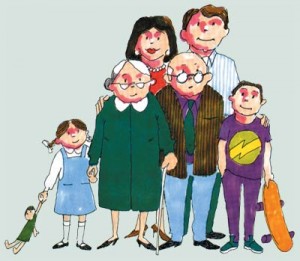
How different is the experience of so many of us professing Christians in our homes – little irritations, frayed tempers, selfishness and resentments; and even where there is nothing very definitely wrong between us, just not that complete oneness and fellowship that ought to characterize Christians living together. All the things that come between us and others, come between us and God and spoil our fellowship with Him, so that our hearts are not overflowing with the divine life (pg. 71).
We can walk in the Spirit with people we don’t know, but we struggle with impatience, anger, bitterness, and even revenge with family members. Dependence on the Holy Spirit is needed in even greater measure for our fuses are shorter at home, our frustrations are greater at home, and our memories of hurt are deeper at home.
How do we stand up to those tests in our homes? So often we act in the very opposite way. We are often impatient with one another and even unkind in the way we answer back or react. How much envy, too, there can be in a home. A husband and wife can envy the other their gifts, even their spiritual progress. Parents may be envious of their children, and how often is there not bitter envy between brothers and sisters. Also “not behaving unseemly,” that is, courtesy, what about that? Courtesy is just love in little things, but it is in the little things that we trip up. We think we can “let up” at home (pg. 74).
God uses our home lives as a place of discipline to correct the weaknesses of character and selfishness of heart that outsiders cannot see (Heb. 12:7-11). Oswald Chambers reminds us that life away from home is always easier. That insight could expand why on some occasions, we avoid our families.
We sing, “There’s no place like home,” but the author of that song was far away from home when he wrote it. The description the Bible gives of home is that it is a place of discipline. Naturally we do not like what God makes; we prefer our friends to our God-made relations. We are undressed morally in our home life and are apt to be meaner there than anywhere else. If we have been captious and mean with our relations, we will always exhibit that spirit until we become new creatures in Christ Jesus. That is why it is easier to go somewhere else, much easier often to go as a missionary than to stay at home. God alters the thing that matters.
[Oswald Chambers, The Highest Good : Containing Also The Pilgrims Song Book and The Great Redemption (London: Marshall, Morgan & Scott, 1996), 10.]
Personal revival begins here: my repentance must be quick, my forgiveness must be greater, and my love must be fuller. My family must be and should be the first testimony of my renewed life in Christ. Revival is the life of Christ filling us and flowing through us (pg. 70). The only way out of this vicious pattern of hurt, anger and resentment is by depending on Christ to be himself in us. Call sin, “sin,” repent to family members, forgive quickly past offences, and love with the love of Christ: these godly choices bring renewal to families severed by hurt, envy, and jealousy.
As we bow the neck at the Cross, His self-forgetful love for the others, His long-suffering and forbearance flow into our hearts. The precious Blood cleanses us from the unlove and ill-will and the Holy Spirit fills us with the very nature of Jesus. 1 Corinthians 13 is nothing less than the nature of Jesus, and it is all gift to us, for His nature is ours, if He is ours. This blessed process can happen every single time the beginnings of sin and unlove creep in, for the cleansing fountain of Blood is available to us all the time (pg. 76).
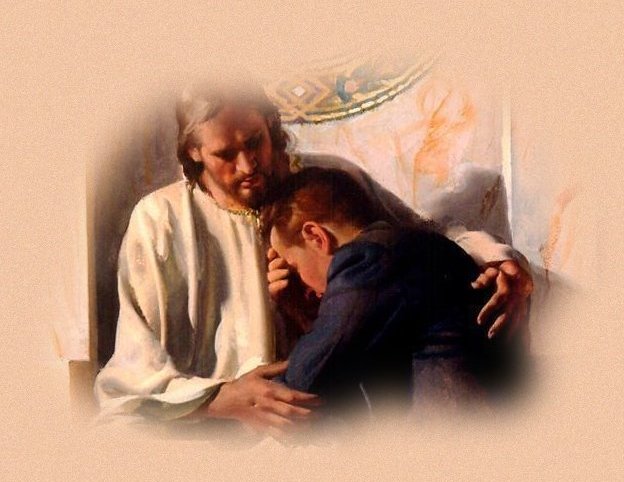
We must yield up our wills, rights, desires, and self-images to Christ. Brokenness is needed. Brokenness is a heart yielded to God; ready and willing to obey the Holy Spirit whenever and wherever He directs. God will direct us to lay down our lives for our families. We can go to Africa and lay down our lives for complete strangers, but can we yield our rights at home? Are we willing and ready to forgive our biological biological brothers and sisters right here at home? Going to Christ together as families for forgiveness will unite our families and bring God’s blessing.
But God will surely answer our prayer and bring the other to Calvary too. There we shall be one; there the middle wall of partition between us will be broken down; there we shall be able to walk in the light, in true transparency, with Jesus and with one another, loving each other with a pure heart fervently. Sin is almost the only thing we have in common with everyone else, and so at the feet of Jesus where sin is cleansed is the only place where we can be one. Real oneness conjures up for us the picture of two or more sinners together at Calvary (pg. 78).
The only way out for families struggling with disunity and resentment is knelling together before the Cross.
Prayer: Lord, come by your Holy Spirit and work in our hearts. May our Christian lives be as evident in our homes as our Christian committment is apparent to outsiders.