My Sermons


WorshipBeforeThroneOfGod Heavenly Worship (Part Two)

Every Creature in Heaven and Earth is Worshipping Now

And every creature which is in the heaven and upon the earth and under the earth, and those that are upon the sea, and all things in them, heard I saying, To him that sits upon the throne, and to the Lamb, blessing, and honour, and glory, and might, to the ages of ages.

Rev. 5:13

Often when we think of the Book of Revelation, we think future: second coming, final judgment, and the new heavens and new earth. However, the events in the Book of Revelation have happened, are happening, and will happen (Rev. 1: 8). These unusual and spectacular events happened in the first century to the original recipients of this book, prophecy, letter of John. Revelation speaks today to churches oppressed and persecuted by mighty governments who claim absolute, almost religious, authority over every citizen in their realm. Of course, the Book of Revelation contains insights into eternity which speak of Christ’s visible return in glory and the experience of eternal life in God’s presence.

Revelation chapters four and five reveal to us the the great throne of God. The throne is a symbol of the sovereign majesty of the King. The world may be in turmoil, but God reigns: he is defeating his foes, expanding his kingdom, and overcoming Satan’s wiles. Around the throne, all manner of heavenly creatures, elders, angels, and humans worship and declare their praises of the Holy One and the Lamb.

The door to heavenly worship (Rev. 4:1) is open as we “join our voices with Angels and Archangels and with all the company of heaven” (1979 Book of Common Prayer, 362) to praise and worship the Holy One and the Lamb for their holiness (5:8), for creation (4:11), for New Covenant blessing (5:9-10), for Calvary’s victory (5:12), and for their Unity (5:13). Around the Table of the Lord, the church is given a grand invitation to be lifted up into the heavenly places (Eph. 1:3) and experience now the joy of eternal worship.

In the earthly liturgy we take part in a foretaste of that heavenly liturgy which is celebrated in the holy city of Jerusalem toward which we journey as pilgrims, where Christ is sitting at the right hand of God, a minister of the holies and of the true tabernacle; we sing a hymn to the Lord’s glory with all the warriors of the heavenly army; venerating the memory of the saints, we hope for some part and fellowship with them; we eagerly await the Saviour, Our Lord Jesus Christ, until He, our life, shall appear and we too will appear with Him in glory.

Constitution on the Sacred Liturgy 8, The Council of Vatican II.

 Heavenly Worship (Part One)

Lifted Up With the Ascended Christ

At once I was in the Spirit, and behold, a throne stood in heaven, with one seated on the throne.

Rev. 4:2

Heavenly worship occurs during the celebration of the ancient liturgy as the people of God are lifted up to heaven with the ascended Christ as they partake of Holy Eucharist. The Holy Eucharist unites heaven and earth by elevating the church into an experience of worship with the people of God, past and present, around the throne of God in the presence of God.

Heavenly worship recognizes that the line between the physical reality of earth and its three dimensions and the spiritual reality of heaven and its angelic worship will become blurred as we enter the presence of the Lamb of God , slain yet standing, on the altar of God.

The worship that we experience on earth should be an experience of the worship that is presently occurring in heaven. Not only should heavenly worship be our experience, but our models of worship should reflect those elements of worship used in heaven.

Biblical instruction directs the people of God to worship following the model and practices of heaven. Earthly worship is to mirror heavenly worship in “spirit and in truth” (Ex. 24:9-11; Isa. 6:1-5; Ezek. 1:4-28; Dan. 7:9-14; Heb. 12:22-24; Rev. 4:1-5:14).

In order that pious souls may duly apprehend Christ in the supper, they may be raised up to heaven . . . and for the same reason it was established of old that before the consecration the people should be told in a loud voice to lift up their hearts.

John Calvin, The Institutes of the Christian Religion, 4.17.36.

We knew not whether we were in heaven or on earth.” Worship, for the Orthodox Church, is nothing less than “heaven on earth.” The Holy Liturgy is something that embraces two worlds at once, for both in heaven and on earth the liturgy is one and the same—one altar, one sacrifice, one presence. In every place of worship, however humble its outward appearance, as the faithful gather to perform the Eucharist, they are taken up into the “heavenly places”; in every place of worship when the holy sacrifice is offered, not merely the local congregation is present, but the church universal—the saints, the angels, the Mother of God, and Christ himself.

Timothy (Kallistos) Ware, “The Earthly Heaven,” Eastern Orthodox Theology: A Contemporary Reader, ed., Daniel Clendenin (Grand Rapids, MI: Baker, 1995), 12.

Koinonia: Sharers in the Life of God

When we bless the cup at the Lord’s Table, aren’t we sharing in the blood of Christ? And when we break the bread, aren’t we sharing in the body of Christ?

1 Cor. 10:19 NLT

I was raised in a tradition that taught that the Lord’s Supper (i.e., Holy Eucharist or Holy Communion) was merely symbolic.  By the partaking of the grape juice and the consumption of a cracker, a simple memorial meal was offered to give thanks for the death of Christ. I always appreciated these quarterly services, but I thought there must be something more to this solemn ritual. The spiritual experience of the celebration of our Lord’s Body and Blood had to be more significant than just a service of memory by mental recall.

As a young Christian, I studied Paul’s First Letter to the Corinthians faithfully and diligently. In my studies, I found key biblical words which provided deeper meaning to the celebration of the Lord’s Supper (1 Cor. 10: 14-22) than previously I had been taught. Consequently, I realized that large segments of the Body of Christ also made that same discovery and practiced those truths for centuries.

One of those words of significance was the Greek word, koinonia (1 Cor. 10: 16).  Koinonia is translated as share (NLT, NASU, NRSV), participate (NIV, ESV), partake (The Message), fellowship, commune (NKJV), and union (Douay-Rheims). As the reader can see, Koinonia is a word of great depth and meaning. The Apostle Paul is saying that when we receive the elements of wine and bread; we are sharing, participating, partaking, fellowshipping, communing, and uniting with the risen Christ. In Holy Communion, we experience afresh all the benefits of the finished work of Christ and encounter through Christ’s presence sanctifying grace to live the Christian life.

When we drink the Blood of Christ and and eat of the Body of Christ . . .

1. We share in the power of the resurrected Christ. He is risen and therefore alive, and by his power, we are made victorious.

2. We participate in the very life of God. We become receivers of the divine nature (2 Peter 1:4).

3. We partake of his grace. Sanctifying grace to live the Christian life: strength and power to respond to every life situation according to the will of God.

4. We fellowship with God and all his saints as the congregation enters into heavenly worship (Rev. 4 & 5).

5. We commune with Christ enjoying afresh his love, grace, and covenant promises.

6. We are brought into union with the heart and will of God. Our hearts are “righted” as we receive Christ the Body and Blood of Christ. By partaking, we submit to his Lordship afresh conforming our hearts and wills to his designs and purposes.

In summary, the Apostle Paul describes our Eucharistic meal as a koinonia. Koinonia means sharing, partaking, fellowship, communing, and unifying participation in the life of God. When we drink the Blood and eat the Body of our Lord Jesus Christ: we commune with Christ, we share in his resurrection, we partake of his grace, we fellowship with God and his saints, and we are brought into union with his heart and will. In short, we become partakers—people who share in the very life of God.

Daily communion and participation in his holy Body and Blood of Christ is a good and helpful practice. Christ clearly says, “He who eats My Flesh and drinks My Blood has eternal life.” Who doubts that to partake of life continually is really to have life in abundance? For myself, I communicate four times a week . . .  on the Lord’s Day, on Wednesday, on Friday, and on Saturday, and on the other days if there is a commemoration of a martyr.

St. Basil the Great of Caesarea (375 A.D.) cited in What the Church Fathers Say About  . . . ed., George W. Grube (Minneapolis, MN: Light and Life, 1996), 8.

First Sunday of Lent Year C

For we do not have a high priest who is unable to sympathize with our weaknesses, but one who in every respect has been tempted as we are, yet without sin.

Heb. 4:15

Great Receivers: Without hesitation, reservation, equivocation, or qualification, great receivers open their hearts to God’s grace in season or out. They look to God during good times or bad. In the midst of spiritual highs or emotional lows with hearts wide open, great receivers look to Christ to be their deliverance. They keep their eyes on Jesus, enjoy his moment-by-moment presence, and draw strength from his grace. Great receivers recognize that they cannot be victorious over temptation without trusting Christ for help in their time of need (Heb. 4:16).

Illustration: “Some people fall into temptation, but a great many make plans for disaster ahead of time. “Son,” ordered a father, “Don’t swim in that canal.”

“OK, Dad,” he answered. But he came home carrying a wet bathing suit that evening.

“Where have you been?” demanded the father.

“Swimming in the canal,” answered the boy. “Didn’t I tell you not to swim there?” asked the father.

“Yes, Sir,” answered the boy.

“Why did you?” he asked.

“Well, Dad,” he explained, “I had my bathing suit with me and I couldn’t resist the temptation.”

“Why did you take your bathing suit with you?” he questioned.

“So I’d be prepared to swim, in case I was tempted,” he replied.

Charles Swindoll, One Step Forward, p. 85.

My sermon notes for “Great Receivers Stare Down Temptation” (Matt. 4:1-11) are available as a Google document.

ash2006 Repentance: The Joy Filled Life

Ash Wednesday Sermon

For godly grief produces a repentance that leads to salvation without regret, whereas worldly grief produces death.

2 Cor 7:10-11

Definition: Repentance is simple, but not easy: repentance is a change of mind that by God’s grace leads to change of heart which creates a change in our behavior.

Conclusion: Even when we fail, God keeps his face turned toward us. We are still his child, but our behavior he cannot honor. Therefore when we sin, the Lord withdraws his presence from us (not our salvation). Repentance allows us to enter back into his presence and enjoy all the blessings of New Covenant (Jer. 31:31-34).

Repentance is a lifestyle not a one-act play. Repentance is a life-long interaction with the Holy Spirit: convicting, forgiving, releasing, restoring, and renewing. We are joyful because Christ forgives freely, Christ’s righteousness applies always, and Christ’s presence is available constantly. We are therefore free from self-consciousness, sin-consciousness, Satan-consciousness, and performance consciousness. We are free to enjoy Jesus.

My sermon outline and notes for “Repentance: The Joy-Filled Life” are available in their entirely as a Google document.

091simeon Advent, Mary, and Prophetic Hope

The Blessed Virgin Mary Receives Personal Prophetic Words

And Simeon blessed them and said to Mary his mother, ‘Behold, this child is appointed for the fall and rising of many in Israel, and for a sign that is opposed (and a sword will pierce through your own soul also), so that thoughts from many hearts may be revealed.’

Luke 2:34-35

On this blog, we have discussed the word of prophecy (1 Cor. 12: 10), its importance during the season of Advent, and how to respond when given a confirmed prophetic word. Today’s post focuses on the Blessed Virgin Mary as a model for receiving and acting on prophetic words. Luke 2:25-40 describes two prophetic ministers, Anna and Simeon, reaching out to Mary when the baby Jesus is being presented at the Temple for circumcision.

Simeon was united in Christ in righteousness, “righteous and devout” (v. 25a), yielded to Christ trusting his delay, “waiting for the consolation of Israel” (v. 25b), and remained in Christ enjoying his manifested presence, “Holy Spirit was upon him” (v. 25c). Simeon was intimate with God for Simeon knew his voice, “you would not die” until he sees Messiah (v. 26), and Simeon was led by the Spirit for he was directed by the Spirit “into the Temple courts” (v. 27).

Simeon’s prophetic word consisted of two parts: public in Temple (v. 29-32) and private to Mary (v. 34-35).The public pronouncement focuses on Jesus–God’s salvation found in the baby. This salvation is for the Gentiles and the Jews bringing about the healing of the nations.

Simeon’s personal word to Mary is strangely negative: the proud, self-absorbed, self-assured, and hard-hearted will be revealed (v34-35). Israel will resist Jesus’ ministry, and as result, their worldly, unbelieving hearts will be exposed.  In turn, Israel’s rejection of Mary’s son, the Son of God, will break her heart as well. [Stephen D. Swihart, ed., Logos International Bible Commentary (Plainfield, NJ: Logos International, 1981), 439.

Some may ask why Simeon’s word of prophecy is negative in tone, “Are not all prophecies to be ‘strengthening, encouraging, and comforting’” (1 Cor. 14:3)? “Are not all prophecies to be positive and uplifting”? A prophecy can contain a rebuke, correction, or warning and still be comforting and healing. When Jesus corrects or rebukes, he also gives the grace, the Holy Spirit’s enabling power, to obey his word of command. Jesus gives prophetic words to the seven churches of Asia: five of the seven are rebuked or corrected for their lack of holiness, obedience, or perseverance. Yet, all five are encouraged, graced, and offered a reward for choosing obedience (Rev. 2 & 3).

Simeon’s warning to Mary is the Holy Spirit’s way of helping Mary avoid the pain and shock of unexpected suffering and rejection. It is good that Mary knows now that her precious child’s future death will break her heart in the painful of ways–the Cross.

Anna, a female prophetess, lived her entire life in the Temple courts: she was dedicated to worship, fasting, and praying. Anna represents wholehearted devotion to God and his presence (Luke 2:37). Like Simeon, spending time in God’s presence means knowing God’s heart, and to know God’s heart is to hear his voice, and to hear God’s voice is know his ways. Immediately after Simeon’s word, Anna confirms that this child will bring about the redemption of Israel (Luke 2:38). To be the redeemer of Israel is to be the Messiah, the chosen one, who would free Israel from her bondage. Anna’s word further confirms to Mary and Joseph that the God of Israel has major plans for their son, bigger plans than they can imagine.

Luke does not record the Blessed Virgin Mary’s response to these two words, but we know that in another situation, she chose the “ponder these things in her heart” (Luke 2:19 KJV). Pondering is not passivity. Pondering says to God, “I trust your prophetic word, I may not understand it, therefore I will not talk about God’s instruction until he reveals its meaning to me.” Pondering is faith, pondering is waiting on God, pondering is giving God opportunity and time.

Mary’s humble acceptance of the divine will is the starting point of the story of the redemption of the human race from sin.

Alan Richardson, The New Book of Christian Quotations, comp. Tony Castle (New York, Crossroad, 1982), 158.

In summary; Advent is a unique time for hearing and obeying God’s prophetic word. Like Simeon and Anna, we are called to Spirit-waiting, Spirit-listening, Spirit-anticipation, and Spirit-obedience. Like Elijah and the Blessed Virgin Mary, we are called to Father-directed submission, Spirit-led action, and Christ-follower trust. The Holy Spirit still speaks through the gift of prophecy. As we anticipate Christ’s second return, we can expect more guidance from our heavenly commander.

Come, Lord Jesus, Come!

elijah cloud What Do You Do With a Personal Prophetic Word?

Active or Passive Response?

Here and here, we defined the word of prophecy as a spiritual gift and how during this season of Advent, we especially need to seek the prophetic word. Today, we reflect on how to respond when a prophetic word is given by the Holy Spirit.

What should our response be to a confirmed prophetic word (1 Cor. 14:29)? Do we just sit around and wait? Do we just discuss it, debate it, or analyze it? Is it possible that the Holy Spirit desires for us to pray this move of God—an inbreaking of the kingdom—into existence?  The Holy Spirit calls us to obey Isaiah’s injunction, “Seek the Lord while you can find him. Call on him now while he is near” (Isa. 55:6, NLT). We seek the gift of prophecy for we hunger for God’s direction in the midst of the chaos and confusion of this world (1 Cor. 14:1).

The prophetic word is an invitation to enter God’s promises, to receive God’s provision, and to release God’s kingdom (1 Cor. 14:1-5). When a prophetic word is given to us, we are called to pray the promise’s fulfillment, believe the promise’s pledge, and obey the promise’s command.  In other words, we are not to sit passively waiting for a prophetic word to come true, but we are called by God to be actively cooperating with the Holy Spirit to see that word fulfilled.

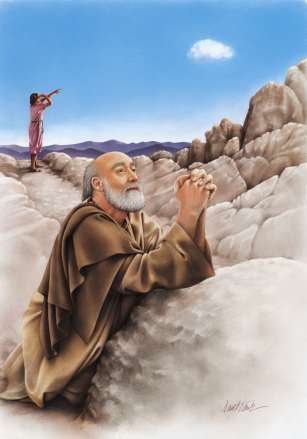
Elijah is a biblical example of responding to God’s prophetic word: he acted and prayed into existence God’s promise of rain (1 Kings 18:1, 41-46).

Elijah sought the Lord even when the word of the Lord was clear and unequivocal; he did not wait passively, but pursued Yahweh while he could be found. God promised Elijah, “Go, present yourself to Ahab, and I will send rain on the earth” (1 Kings 18:1, NKJV). First, Elijah obeyed the word of the Lord and was immediately obedient to the heavenly command. For in verse two, Elijah went and presented himself to his greatest enemy King Ahab. He obeyed despite the threat of rejection, persecution, and even possible death.

Second, Elijah grabbed hold of the word of God and believed it for he heard “the abundance of rain” before it was ever visible (v.41). Third, Elijah sought the Lord in prayer basing his request for rain on the promise of God (v.1).  Fourth, Elijah humbled himself before the Lord, not demanding, but requesting that God honor his promise of rain. “And Elijah went up to the top of Carmel; then he bowed down on the ground, and put his face between his knees . . . ” (v. 42). Fifth, Elijah was earnest; he wanted to see the word of the Lord fulfilled (James 5:17). He persevered until the answer came, for “seven times” he looked longingly to the sea for rain (v.43).

Sixth, Elijah was undeterred for he continued to believe God even after six times of seeing no results from his prayers. Seven, Elijah acted on God’s prophetic word for he gave Ahab instructions to drive through the Jezreel Valley before rain flooded the area. Elijah based his orders on seeing a cloud as small as a man’s hand, thus Elijah was a man of faith (v.44). Elijah saw his prayer answered (v.45) and became an example for us all (James 5: 16a-18). [F. B. Meyer, Elijah: And the Secret of His Power (Fort Washington, PA: Christian Literature Crusade, 1978), 90-100.]

Conclusion, Elijah is biblical example for receiving a prophetic word: we should pray until the promise is fulfilled. The great prayer warrior, E. M. Bounds, instructs us in the same manner:

All revivals are dependent on God, but in revivals, as in other things, he invites and requires the assistance of man, and the full result is obtained when there is cooperation between the divine and the human. In other words, to employ a familiar phrase, God alone can save the world, but God chooses not to save the world alone.

E. M. Bounds, Purpose in Prayer found in The Complete Works of E. M. Bounds on Prayer (Grand Rapids, MI: Baker Book House, 1990), 360.

sistine chapel ceiling prophe  br hi 300x235 Advent and the Gift of Prophecy

Prophetic Hope

“Eagerly desire . . . the gift of prophecy”

1 Cor 14:1

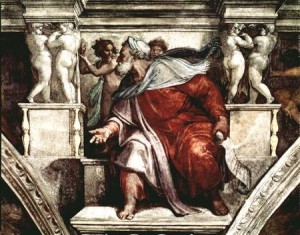
In a previous post, I defined the spiritual gift of prophecy as spontaneous, Spirit-inspired, intelligible speech, orally-delivered to the church gathered intended for the building up of the people of God. Prophecy can be both foretelling; insights into the future plans of God, and forthtelling; God’s word for our present circumstances.

During the church season of Advent, the word of prophecy is important for Advent is the period of the Christian year dedicated to prophetic hope. Prophetic hope is believing and expecting God’s inspired promise of Jesus’ soon return. Advent means confident waiting: waiting on God to fulfill his word that Jesus will return in a physical body to bring his church home and judge the world (2 Peter 3:8-10). Advent is a prophetic season for we wait for the prophetic fulfillment of Jesus’ second coming while marveling at the Old Testament prophetic fulfillment of Jesus’ first coming. The Old Testament prophets spoke of Jesus’ birth, ministry, and death (Gen. 3:15; Micah 5:2; Isa. 7:14. 53:4-7) and years later these promises were fulfilled. Today, we read the prophetic words of Jesus, Paul, John, and Peter concerning the Second Coming (Mark 13:26-27; 1 Thess. 4:13-18; Titus 2:11-14; 2 Peter 3:8-10; Rev. 19:11-16) and with confidence we expect the prophetic words of scripture to be fulfilled again.

The word of prophecy is hope: knowledge that God is aware of our need and actively working to meet that heart-cry. The gift of prophecy points the Church to Christ, calls for obedience to his commands, and brings healing and restoration. The gift of prophecy reminds believers of their call to holiness, their dependence on God’s grace, and the faithfulness of God’s promise. Corporately, the prophetic gift calls forth repentance, restoration, and renewal in the Body of Christ. The prophetic gift builds up the Church in her call to be God’s witness to the world (1 Cor. 12:31, 14:1, 39; Heb. 2:3-4).

During the season of Advent, the church can expect the Holy Spirit to encourage, comfort, and strengthen all believers for the coming year.

True Prophets are the healers, preachers, and teachers who are “binders of wounds,” because they call people to genuine transformation and repentance. True prophetic words point to sin, to what is amiss in a life or in a culture; they warn of the consequences if one fails to repent (here a predictive element can come in); they console; they encourage. They do all this in conjunction with the fundamental truth that the testimony of Jesus is the spirit of prophecy (Rev. 12:10).

Leanne Payne, Heaven’s Calling: A Memoir of One Soul’s Steep Ascent (Grand Rapids, MI: Baker Books, 2008), 116.


enoch Enoch: A Last Days Man

An Advent Prophetic Word

When Enoch was 65 years old, he became the father of Methuselah. After the birth of Methuselah, Enoch lived in close fellowship with God for another 300 years, and he had other sons and daughters. Enoch lived 365 years, walking in close fellowship with God. Then one day he disappeared, because God took him.

Gen. 5:21-24 (NLT)

Genesis five shares a short story about a man named Enoch and his unusual and distinctive walk with God. What makes Enoch’s walk powerful was his determination to commune with God no matter how badly the culture around him was morally deteriorating. Like Enoch, the church finds itself in a perilous place: a decadent culture challenging the church to dare live its commitment to Biblical truth (2 Tim. 3:1-5). We like Enoch must be determined in our hearts to walk with God no matter how bad things become.

Many in the church make excuses, “It’s too hard to walk in the Spirit, we just can’t do it in the midst of all these problems.” Yet, the Bible speaks powerfully, “God’s grace is sufficient in all weakness” (2 Cor. 12: 1-10). Grace is available always, in every place, at any time, in the all-sufficient person, Jesus Christ (John 1:17). Imagine, Enoch walked with God never knowing the power of the Cross, no experience of the Holy Spirit, no benefits of the covenant, no grace in the sacraments, no sweetness of fellowship with other believers, no spiritual encouragement through the church, etc., yet he continued in sweet communion with our most loving and gracious God.

No matter how bad our circumstances are, grace is available to respond like Jesus in every life situation (2 Cor. 9:8). Grace is available for all our current circumstances no matter our tight funds, no matter our emotional need, no matter how frustrating our lives: God gives us grace to walk in the Spirit to respond like Jesus in every life situation (Gal. 5:16-26). Our circumstances are never bigger than God’s grace (2 Cor. 12:1-10).

St. Thomas More declared, “The times are never so bad that a good man cannot live in them.” The Apostle Paul reminds us that when sin increases, grace abounds the more (Rom. 5:20).Enoch tapped into that grace and walked with God. To walk with God means to talk with God. Their communion with one another was intimate and personal. Enoch knew God’s heart and God was blessed by his love (John 17:24). The Lord wanted to be with Enoch,”God took him away” (Gen. 5:24), thus the Lord allowed Enoch to by-pass death and brought him straight into his presence.

Not only did Enoch walk with God when all others were rejecting the Lord: he walked intimately and powerfully in constant communication with his heavenly Father (Heb. 11: 5-6). To walk by faith and please God with our attitude means to catch the heartbeat of God by believing and obeying his word not because we ought to, but because we want to. The writer of Hebrews commends Enoch because his heart of faith pleased God (Heb. 11: 5-6). Faith is a gift from God and a choice of our hearts enabling any child of God to believe that the Father, Son, and Holy Spirit are faithful, sufficient, and present for every life circumstance. Maintaining faith is a battle of the heart, staying fixed on the goodness and faithfulness of God. Enoch maintained his faith in a culture that had chosen to reject and blaspheme God. In this, Enoch pleased God’s heart. Enoch heard God’s voice thereby knowing God’s heart thereby he was able to share God’s word. Enoch did not hoard God’s word unto himself, Enoch taught God’s heart to a people who were constantly resisting God’s grace. Enoch was willing to share a message that was not going to be heard–a message of judgement:

Now Enoch, the seventh from Adam, prophesied about these men also, saying, “Behold, the Lord comes with ten thousands of His saints, to execute judgment on all, to convict all who are ungodly among them of all their ungodly deeds which they have committed in an ungodly way, and of all the harsh things which ungodly sinners have spoken against Him.”

Jude 14-15 (NKJV)

By God’s grace, Enoch walked with God, heard his heart, knew his ways, and communicated God’s truth in a decadent and decaying culture.

Three hundred years is a long time. What kept Enoch walking with God for three hundred years? He had an awareness of judgment coming. He had a sensitivity to the ungodliness of the age. And he drew closer to God as the reality of these things pressed in upon him. The way to graph it would be to make a circle, space these three items around the circle, and then show by arrows that each one influenced the other. The more Enoch was aware of the judgment, the more sensitive he was to sin. The more sensitive he was to sin, the closer he wanted to walk with God. The closer he walked with God, the more clearly he saw that judgment was necessary. Or the other way: the more clearly he saw the judgment coming, the closer he wanted to walk with God, and the closer he walked with God the more sensitive he was to ungodliness.

If you keep close to God, you will keep from sin. But if you sin persistently, you will fall away from God. Then you will rename the sin. You will not talk about pride, the great sin; you will call it “self-esteem,” “self-worth,” or what is “due to me.” You will not talk about gluttony and materialism; you will talk about “the good life.” You will not talk about disobedience; you will talk about “shortcomings.” You will not talk about the Ten Commandments and your violation of them; you will talk about your “mistakes.” It is only when you draw close to God that these things will become increasingly sinful in your sight. Only then will they work together to make you a preacher committed to calling men and women to repentance and faith in Christ before the judgment comes.

James Montgomery Boice cited in Feed My Sheep: A Passionate Plea for Preaching, 2nd edition (Reformation Trust Publishing, 2008).

We too can trust Christ and find him faithful in the midst of morally decadent culture. First, we walk with God by allowing the prevailing power of the Holy Spirit to subdue our sinful nature. Second, we trust God’s atoning work in Christ that our sin has been forgiven and forgotten. We stop striving in our best efforts to be accepted with God and we trust Christ’s supreme effort as our means to acceptance with God. Third, we abide in constant, conscious presence of Christ. We abide in Christ by holding steady in his presence trusting God’s promises by faith irrespective of the challenges, trials, and tribulations of our lives.

‘And Enoch walked with God’ (Gen. 5:22,24), that is, he kept up and maintained a holy, settled, habitual, though undoubtedly not altogether uninterrupted communion and fellowship with God, in and through Christ Jesus. So that to sum up what has been said . . . walking with God consists especially in the fixed habitual bent of the will for God, in an habitual dependence upon his power and promise, in an habitual voluntary dedication of our all to his glory, in an habitual eyeing of his precept in all we do, and in an habitual complacence in his pleasure in all we suffer.

George Whitefield, Selected Sermons of George Whitefield (Oak Harbor, WA: Logos Research Systems, Inc., 1999).

Fourth, we are committed to continual growth in the knowledge and love of God (2 Peter 3:18). We commit to grow in Christ by reading his word, praying his will, trusting his promises, receiving his grace in the sacraments, fellowshipping with his servants, and serving his church. God is raising up Last Days Enoch’s who will walk with God in the midst of a hostile, apathetic, and immoral culture.

SuperStock 1039 15006 The Blessed Hope (Sermon Series)

The Second Coming of Jesus

For the Lord himself will descend from heaven with a cry of command, with the voice of an archangel, and with the sound of the trumpet of God. And the dead in Christ will rise first.

1 Thess 4:16-17 (ESV)

Sunday at Lamb of God, I began a series of sermons on the Second Coming of Christ. My burden is that our parish would come to experience the pure joy of anticipating Christ’s return. Too often, Second Coming teaching has generated fear and confusion in the church. My desire is to preach Christ and not a theological system. Our focus will not be on the mark of the beast, secret rapture, and/or secular events, but the final triumph of Christ. When Christ appears, he will completely defeat the world, the flesh, sin, death, and the devil. Paul describes the Second Coming as the “blessed hope” (Titus 2:13) not a tormenting fear, or a tragic disaster, or a lost cause, but a blessed hope.

Biblical hope is not a wishful desire, but the confident expectation that the good things that God has promised he will bring to pass. We hope to see Jesus face-to-face. We hope to see loved ones again who have died in Christ. We hope that sickness and suffering will end and death will be no more. This Biblical hope does not disappoint (Rom. 5:5) for one day Christ will appear in the clouds and death will be defeated (1 Cor. 15:25-26) and we will reign with him forever.

Salvation is not a matter that concerns only the destiny of the individual soul. It includes the entire course of human history and mankind as a whole. The coming of Christ is a definitive event for all men; it means either salvation or judgment. Furthermore, salvation is not merely an individual matter; it concerns the whole people of God, and it includes the transformation of the entire physical order.

George Eldon Ladd, A Theology of the New Testament (Grand Rapids, MI: Eerdmans, 1974), 557.

My message can found at the Lamb of God Charismatic Episcopal Church website for listening or downloading.

« Previous PageNext Page »